 Dental restorations help individuals regain oral functions like chewing and achieve better smiles. Although dentists' skills and experience are necessary to achieve favorable results, material choices contribute significantly to patient satisfaction.
What are some standard dental restoration treatments?
Dentists consider the location of teeth in the mouth and patients' input when selecting materials for dental restorations.
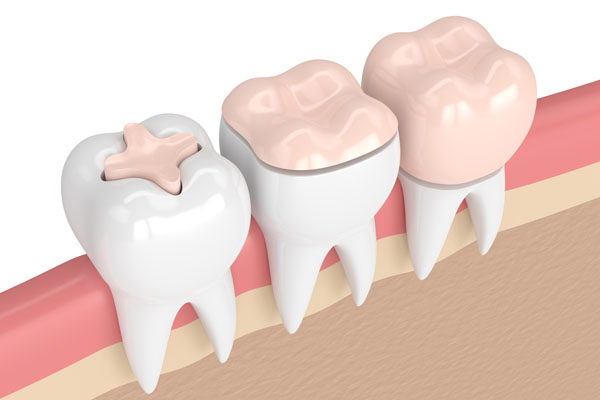
Dentists aim to restore the function and appearance of damaged or missing teeth due to cavities, gum disease, trauma, or wear. Standard restoration procedures include:
- Fillings
- Crowns
- Implants
- Bridges
- Inlays and overlays
- Veneers
What materials do dentists use to restore teeth?
Choosing an appropriate restoration material depends upon balancing function, appearance, and patients' costs. Dentists can choose from traditional and new materials to address oral health and aesthetic concerns.
Gold
Few materials have the longevity and durability of gold, a traditional choice for simple fillings, inlays, overlays, crowns, and bridges. Although gold is soft, it becomes exceedingly strong when mixed with other metals. Dentists recommend gold to restore teeth used for heavy chewing; however, many dental patients prefer more neutral-looking materials for restoring prominent anterior teeth.
Amalgam
Mercury, tin, copper, and silver are mixed to create a low-cost, durable cavity-filling amalgam that withstands heavy chewing. Although amalgam fillings last many years, patients may consider the silver color and tooth discoloration that usually accompanies them a significant downside. Still, the material remains a popular choice for restoring posterior teeth, which are not visible.
Porcelain
Porcelain is beneficial for dental restorations, including fillings, crowns, inlays, overlays, bridges, and veneers. This biocompatible material resembles natural enamel and dentin, has a natural tooth color, and withstands normal chewing. However, dentists may not recommend porcelain restorations for patients with bruxism because excessive tooth grinding will potentially damage the porcelain.
Resin
Dentists may use plastic and powdered glass resin composite to fill cavities. Using this material requires the removal of less of the natural tooth compared to amalgam. Resin also insulates sensitive teeth and is practical for inlays, overlays, and gaps between teeth because it is malleable and natural-looking. Still, resin composite can stain permanently, necessitating periodic replacement.
Titanium
Dentists favor titanium for dental implants to replace missing tooth roots because it is biocompatible and can easily fuse with the natural bone surrounding it. Titanium is also corrosion and crack-resistant, working well as the abutment material that extends through the gum to support the crown during heavy chewing and biting.
Zirconia
Zirconia is a robust alternative to titanium for patients who want implants but are allergic to metal. Its properties enable a one-piece implant and abutment, which insulates sensitive dental tissue from bacteria. Zirconia also produces natural-looking crowns and dental bridges; however, although the material resists damage, it is challenging to manipulate, making it an expensive restorative material.
Lithium Silicate
Lithium silicate or glass-ceramic is an excellent choice for fillings, overlays, inlays, and veneers due to its natural tooth-like translucency and thin profile. Dentists also use lithium silicate to produce convenient, same-day crowns with the help of CAD/CAM machines that can carve them to precise specifications.
Conclusion
Successful dental restorations rely on appropriate techniques and materials. Dentists and patients can work together to choose options that balance various requirements.
Request an appointment or call Frankford Dental Care at 215-302-1746 for an appointment in our Philadelphia office.
Recent Posts
A broken tooth can affect both oral health and confidence. Whether caused by biting into something hard, an accident, or underlying decay, prompt dental care is essential to prevent further damage and restore normal function. Fortunately, modern dentistry provides several reliable treatments that repair structural damage and rebuild a natural-looking smile. A cosmetic, family, or…
A broken tooth can be a stressful and uncomfortable experience, requiring prompt attention to prevent further damage or complications. Whether caused by an accident, biting into something hard, or untreated decay, addressing a broken tooth quickly is crucial to maintaining oral health. Understanding the steps to take after experiencing a broken tooth can help preserve…
A broken tooth is a common dental issue that fills most people with dread, especially when the crack is near the front of the mouth. Front teeth fractures are quite common among children, teenagers, and young adults. Fortunately, a dentist can recommend various repair or replacement options for damaged front teeth to help patients resume…