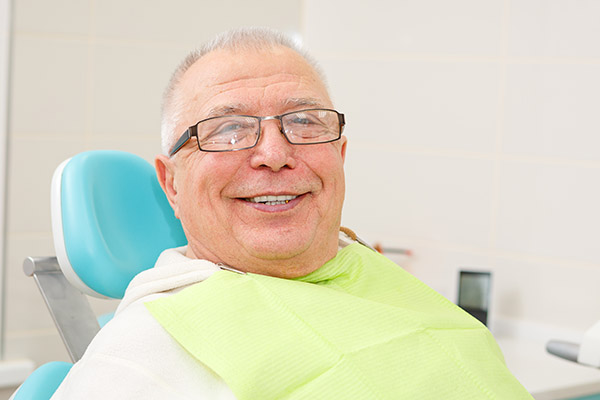
Talking to Your Dentist About Implant Supported Dentures

You may have heard of the classic traditional dentures, but you may not realize that there are other, more stable options out there, like implant supported dentures. While conventional dentures rely on the gums and mouth muscles for support, implant supported dentures (as their name suggests) are attached to and supported by implants in the jawbone.
For edentulous patients (those who have lost teeth), researching the right teeth replacement solution can be confusing. But talking to your dentist about which is best for you can be a liberating experience. Our highly trained staff is here to help.
What are implants?
Dental implants may be best known for their use in single-tooth replacement, but these screw-like devices are frequently used for a variety of dental issues. Implants are made from titanium, a unique metal that can fuse with living jawbone in a process called osseointegration. After being surgically inserted into the jawbone in a strategic configuration, the four to six implants per jaw can support an implant supported denture.
When are implant supported dentures used?
These customized overdentures are often used when a patient does not have any teeth but has sufficient jawbone density to support implants. Implant supported dentures have special attachments that snap onto the implants with ease. There are also permanent implant supported dentures, which are meant to only be removed for maintenance or repair by a professional.
Although implant supported dentures can be used on either the upper or lower jaw, many dentists recommend placement on the lower jaw, as a traditional denture is not as stable there.
Conventional dentures have a tendency to slip out of place, which can make for an uncomfortable chewing experience and decreased confidence in one's smile. Implant supported dentures solve this issue. Heightened support drawing from the jawbone allows the patient to use these dentures much like natural teeth, as the implants replace natural tooth roots.
Another benefit to implant supported dentures is their ability to keep the jaw in use, preventing bone loss. When teeth are lost, the jawbone begins to shrink away due to not being stimulated on a regular basis. Traditional dentures sit on top of the jaw without using it, allowing bone loss to occur beneath. Implant supported dentures constantly use the jaw, preserving it and preventing the sunken appearance that can occur due to a disintegrating jawbone.
Got questions about implant supported dentures?
For patients who have lost most or all of their teeth but still have enough bone to support implants, implant supported dentures could be the solution that you have been looking for. For any questions about implant supported dentures, call our office to schedule an appointment for a consultation. Most patients are great candidates for implant supported dentures, so we can help you design a plan on how to get you on your way to a brilliant smile. Contact us at your earliest convenience; we are here for you!
Request an appointment here: https://frankforddentalcare.com or call Frankford Dental Care at (215) 302-1746 for an appointment in our Philadelphia office.
Check out what others are saying about our services on Yelp: Read our Yelp reviews.
Recent Posts
A dental implant is widely considered the tooth replacement solution that most closely resembles a natural tooth in durability, functionality, and appearance. However, like natural teeth, dental implants require diligent and consistent care to ensure longevity. Incorporating proper dental implant care into your oral hygiene routine can prevent complications and keep your smile healthy for…
A lot of things people do in life are either taught or habit, including getting a dental checkup. For instance, some individuals go once a year because that is what a parent taught them to do. Others might not see a dentist for several years simply because it has become a bad habit. However, having…
Getting a regular dental checkup is critical for good oral health. But what if there is an issue at the appointment? The good news is the dentist has the right training and tools to fix nearly any problem. Keep reading to learn more.Getting dental checkups regularly allows patients to get the teeth cleaned well. That…
For many people, dental anxiety is a significant barrier to getting the care they need, leading to more serious oral health issues. This fear or stress around dental visits can range from mild nervousness to intense apprehension, making it hard to schedule an appointment. However, understanding dental anxiety and learning how to manage it can…